


Brigitte Bardot Turned a Ballet Flat into an Icon of Style
As we honor the French actress and activist following Sunday's news of her passing, we look at the shoe she popularized, which you can still buy today.
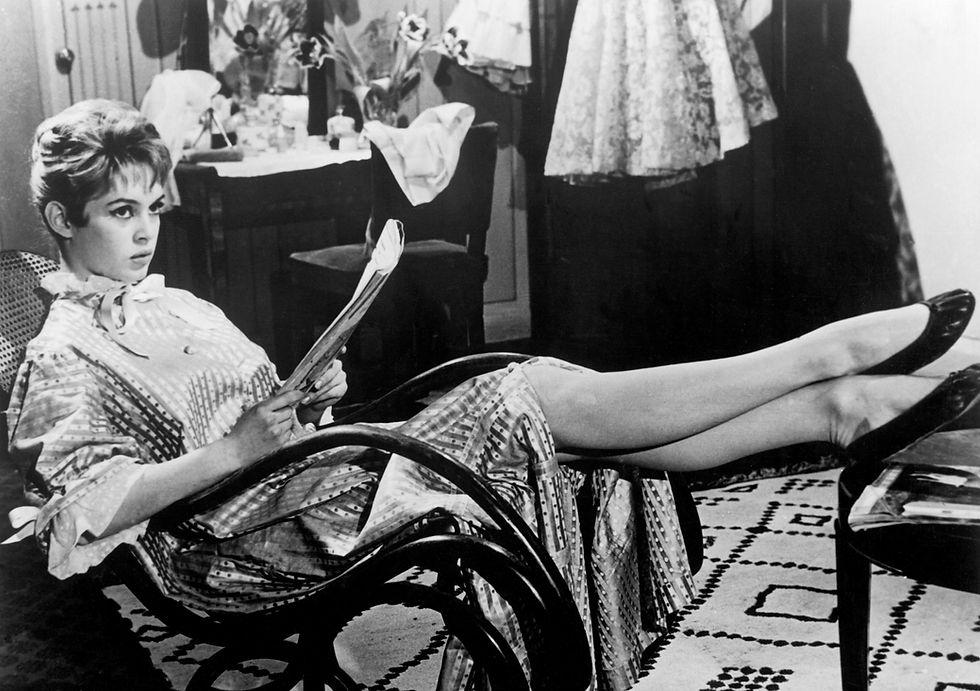
Brigitte Bardot died on Sunday at the age of 91; the announcement of the French icon's passing was made by her eponymous foundation, which the actress created in 1986 to further the cause of animal rights and welfare.
The news of Bardot's death surely inspired a wide variety of memories among her fans. Perhaps you immediately envisioned her in the "sex kitten" persona that garnered worldwide acclaim and publicity. Bardot never shied away from that goddess imagery in her films or on the beaches at Cannes, where paparazzi photos of her frolicking in the Mediterranean surf in a bikini helped propel her to global fame in the mid-1950s.
For devoted fashion fans, however, Bardot's contribution to timeless style extended beyond normalizing the once-scandalous bikini. She also popularized a shoe that was anything but glamorous, but its appearance on a woman who had quickly vaulted into the stratosphere of cinema goddess helped this footwear become an essential element of cool-girl style. We're talking, of course, about the ballet flat.

And not just any ballet flat. The Paris-born Bardot had taken ballet lessons since childhood, and around the same time the film industry was discovering this curvaceous beauty with impossibly long legs, she reached out to the company known for crafting professional dance shoes since 1947: Repetto. Founded that year by Rose Repetto, the brand was guided both by her own love of dance and the career of her son, legendary ballet dancer and choreographer Roland Petit. Repetto's workshop was conveniently located near the Opéra national de Paris, also known as the French capital's Palais Garnier, and in 1959 Rose decided to open a boutique at 22 Rue de la Paix, where it still resides today just steps from the location of her original workshop.
Bardot likely played a role in that decision, having popularized the brand just a few years before. She had already exhibited her preference for basic ballet flats both off and on screen, including 1956's Plucking the Daisy. But prior to the filming of 1956's ...And God Created Woman, Bardot met with Rose Repetto to make a special request: She wanted her character to wear ballet flats in the film — written and directed by Roger Vadim, her husband since 1952 — but she preferred something that was suitable for outdoor wear. Repetto designed a leather shoe that blended the simple lines of a ballet flat with a small stacked heel that could withstand the wear and tear of sidewalks. She also employed a proprietary stitch-and-return technique, a method of handcraft in which the shoe and sole were sewn together while inside-out; when turned back to its finished shape, the result was a shoe that was both sleek and supple. Repetto christened the style the Cendrillon, or Cinderella. (Fun fact: While the Cendrillon is still sold in a variety of colors and finishes at the Rue de la Paix boutique in Paris, you also can find it on, of all places, Amazon; but be warned, its status as an artisanal, handcrafted product made in France also means it's pricey.)
When ...And God Created Woman became an international hit, so did the Cendrillon. That initial shoe was crafted in black leather, but soon enough Bardot was wearing the Cendrillon in other films and in other colors and finishes, including Jean-Luc Godard's 1963 film Le Mépris, co-starring Jack Palance and also known by its English title, Contempt. Bardot is likewise seen in ballet flats the year prior in A Very Private Affair, the 1962 romantic drama directed by Louis Malle and co-starring Marcello Mastroianni; Bardot also has the chance to display her ballet skills in that film, playing a former dancer who turns to modeling and a film career, only to be disillusioned by the constant presence of rabid fans.

If that plot sounds like it was lifted from Bardot's life, that assessment is more than reasonable. Malle said early on that he was fascinated by the level of Bardot's fame and wanted to craft a story that felt autobiographical to her life. And in a 2011 look at A Very Private Affair, Turner Classic Movies includes a Bardot quote from the book The Films of Louis Malle: A Critical Analysis, in which the actress noted that, "There is a lot of truth, somewhat fictionalized, but the basis of the events [in the film] remains true." By all accounts the film was not a success, but in recent years it's gained more of a critical appreciation, both for Bardot's performance and its look at celebrity culture.

Ultimately Bardot may not have been the only woman to popularize ballet flats in the 1950s — Audrey Hepburn also wore them in Funny Face, while Grace Kelly often sported them in off-screen publicity shots — but neither of those style stars played a role in bringing the French brand Repetto to the forefront of style conversations. That distinction exclusively belonged to Bardot in 1956 — and 70 years later, the Repetto Cendrillon remains an icon of French cool-girl style.


